
Flames Without the Firewood Commitment
Gas Log System Installation in Gilmer for homeowners upgrading to low-maintenance fireplace operation
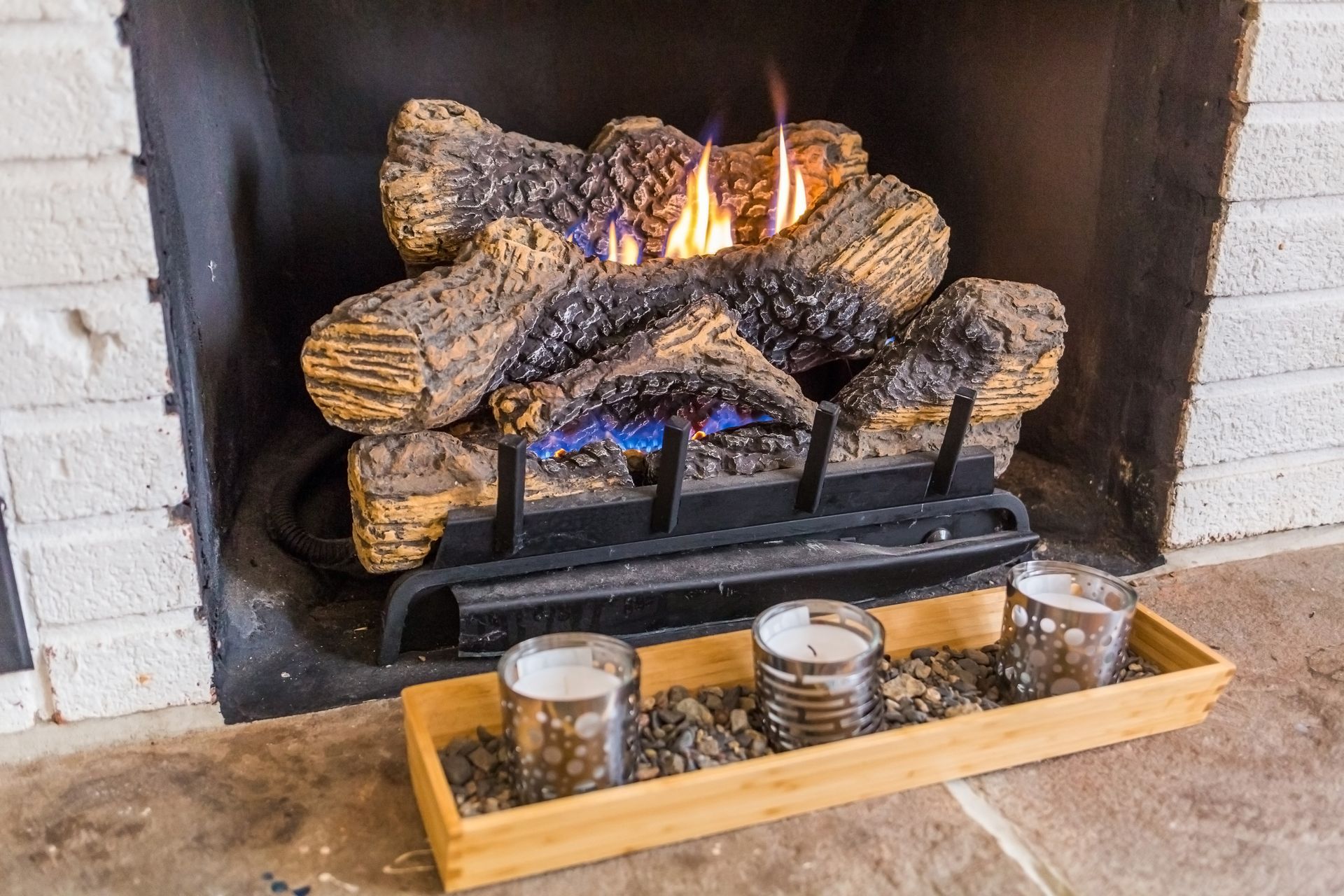
Homeowners across Northeast Texas favor gas log conversions because they replicate the visual authenticity of burning wood while eliminating the need to source, season, split, and store firewood throughout the year. Fireplace Worx installs gas log systems in Gilmer, Longview, Kilgore, Gladewater, and surrounding East Texas areas, integrating burner units, ceramic log sets, venting controls, and safety shutoffs into existing wood-burning fireplaces. The installation transforms the firebox into a gas-fueled system that ignites with a wall switch or remote control and shuts off completely without managing coals or ember containment.
Installing a gas log system requires routing a dedicated gas line to the fireplace, mounting the burner pan inside the firebox, arranging ceramic logs over the burner to create realistic flame patterns, and configuring venting to handle gas combustion byproducts. The burner produces flames that wrap around and between the log shapes, simulating wood fire appearance while delivering consistent heat output controlled by a gas valve rather than fuel addition.
Schedule a property evaluation to determine gas line routing and fireplace compatibility for gas log installation.
What Gas Log System Installation Actually Accomplishes
The installation process starts with measuring your firebox depth, width, and height to select appropriately sized log sets and burner pans that fit without obstructing the damper or crowding the glass doors. Gas line routing follows the shortest path from your home's main supply to the fireplace location, often running through a basement crawlspace, exterior wall penetration, or interior floor access. Venting configuration depends on whether your system operates as vented, using the existing chimney to exhaust combustion gases, or vent-free, relying on oxygen depletion sensors to shut off gas flow when indoor air quality declines.
Once the system is installed, you ignite the fireplace instantly without stacking kindling, lighting paper, or waiting for logs to catch flame. The ceramic logs glow and darken in response to flame contact, creating visual depth that mimics burning wood grain and ember patterns. Heat output remains steady at your selected setting rather than fluctuating as wood logs burn down and require replacement.
Gas log systems eliminate ash cleanup, creosote accumulation on flue walls, and the need to schedule annual chimney sweeping for wood residue removal. Vented systems still require flue inspections to verify that the chimney vents gas byproducts safely, while vent-free models need annual sensor testing to confirm proper oxygen monitoring and automatic shutoff function. Homes in the Longview area that experience occasional winter freezes benefit from the instant warmth gas logs provide without waiting for wood combustion to reach full heat output.
What Property Owners Usually Ask
Homeowners considering gas log installation in Gilmer and the broader East Texas region ask about visual realism, operating costs, and how the system integrates with their existing fireplace structure.
How realistic do gas logs look compared to burning wood?
Modern ceramic log sets replicate specific wood species with bark texture, charred sections, and ember beds that glow red during operation, and the flame pattern adjusts to wrap around logs rather than burning uniformly, creating depth and movement similar to wood fires.
Can I still use my wood-burning fireplace after gas log installation?
Gas log systems occupy the firebox permanently once installed, and burning wood on top of the gas burner and ceramic logs creates safety hazards from damaged components and uncontrolled heat that exceeds the system's design limits, so the conversion is effectively permanent unless the gas components are removed.
What is the difference between vented and vent-free gas log systems?
Vented systems exhaust combustion gases through the existing chimney and produce larger, more realistic flames but lose heat up the flue, while vent-free systems retain all heat inside the room, operate with smaller flame patterns, and include oxygen depletion sensors that shut off gas flow if indoor air quality declines.
How much does it cost to operate gas logs in Northeast Texas?
Natural gas pricing determines hourly operating costs, typically ranging from a few dollars per hour depending on burner size and flame height settings, and gas logs generally cost less to operate than purchasing and hauling seasoned firewood for equivalent heating hours.
Do gas log systems require annual maintenance?
Annual inspection verifies that the pilot light assembly ignites reliably, the thermocouple or thermopile sensors function correctly, gas connections remain leak-free, and the ceramic logs haven't shifted position in ways that obstruct flame ports or create uneven heat distribution across the burner pan.
Fireplace Worx integrates gas log burners, venting, and safety controls into existing fireplace systems throughout Gilmer and Longview, offering installation expertise backed by hands-on service experience. Request a consultation to review your fireplace configuration and gas log options.