
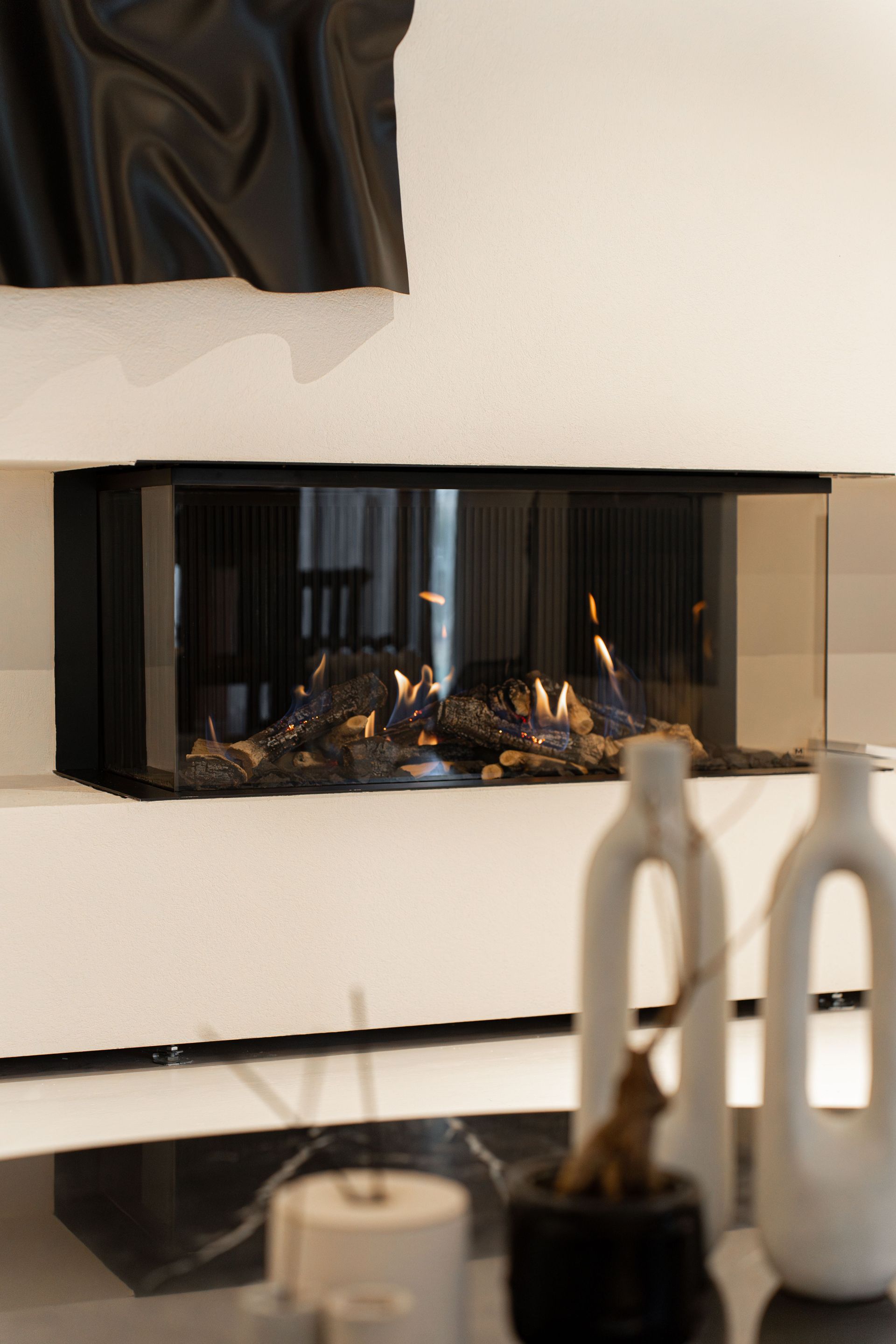
Fireplaces That Heat Without the Wood Hassle
Gas Burner Installation in Gilmer for homes converting to efficient, controllable heat
Fireplace Worx installs gas burners in existing wood-burning fireplaces throughout Gilmer and the Longview area, integrating burner systems with offset installation and existing fireplace structures. Homeowners across Northeast Texas increasingly convert to gas for consistent heat output without splitting wood, hauling ash, or managing ember control. The installation process repositions the heat source while maintaining the visual appeal of the firebox and preserving the existing chimney structure.
Gas burner installation involves connecting a dedicated gas line to the fireplace location, mounting the burner unit inside the firebox, and integrating safety controls that regulate flame height and oxygen levels. The offset installation method positions the burner to distribute heat evenly across the firebox floor while allowing proper venting through the existing chimney. This approach preserves the structural integrity of the fireplace while adapting it for gas fuel delivery.
Schedule an on-site evaluation to review your current fireplace configuration and gas line access.
What Proper Gas Burner Installation Requires
The installation begins with assessing your existing fireplace opening dimensions, chimney draft characteristics, and the most direct route for gas line connection from your home's main supply. Fireplace Worx measures the firebox depth and width to determine compatible burner sizing, then evaluates whether your chimney liner needs modification to handle gas combustion byproducts, which differ from wood smoke in moisture content and temperature.
Once the burner is mounted and the gas line connected, you control heat output with a wall switch or remote rather than adjusting damper positions or adding fuel manually. The flame pattern remains visible through the glass doors or open hearth, but ignition happens instantly and extinguishes completely when turned off. You no longer manage creosote buildup from wood combustion or schedule regular ash removal from the firebox floor.
Gas burner systems require annual inspection of the pilot light assembly, thermocouple function, and gas valve operation to verify safe startup and shutdown cycles. The installation includes a shutoff valve accessible outside the firebox for maintenance or emergency closure. Homes in the 903 area code corridor that rely on fireplace heating during winter cold snaps benefit from the instant warmth gas burners provide without waiting for kindling to catch or logs to reach full combustion.
Questions Before Converting Your Fireplace
Homeowners converting wood fireplaces to gas burner systems in Gilmer typically ask about installation logistics, ongoing costs, and what changes inside the firebox.
What happens to my existing fireplace structure during installation?
The firebox remains intact, and the chimney continues venting combustion gases upward, but the burner unit mounts on the floor where logs previously sat, with a gas line routed through the firebox wall or basement access point below.
How does a gas burner differ from gas logs?
Gas burners produce heat as the primary function and use flame patterns optimized for thermal output, while gas log systems replicate the appearance of burning wood with ceramic logs arranged over the burner, prioritizing visual authenticity over maximum heat delivery.
Can I still use my fireplace damper after gas burner installation?
The damper must remain partially or fully open during operation to vent combustion byproducts, and many installations include a damper clamp that prevents accidental closure, which would trap carbon monoxide inside the home.
How much does it cost to run a gas burner compared to burning wood?
Natural gas pricing in Northeast Texas generally makes gas burners less expensive per hour of operation than purchasing seasoned firewood, and you eliminate the labor cost of splitting, stacking, and hauling wood from storage to the hearth.
What maintenance does a gas burner installation need each year?
Annual inspection verifies that the pilot light ignites reliably, the thermocouple shuts off gas flow if the flame extinguishes, and the burner ports remain clear of dust or debris that could affect flame distribution across the unit.
Fireplace Worx handles gas burner and offset installation for homeowners throughout Gilmer and Longview who want reliable fireplace heat without wood management. Request a detailed estimate based on your fireplace dimensions and gas line routing requirements.